
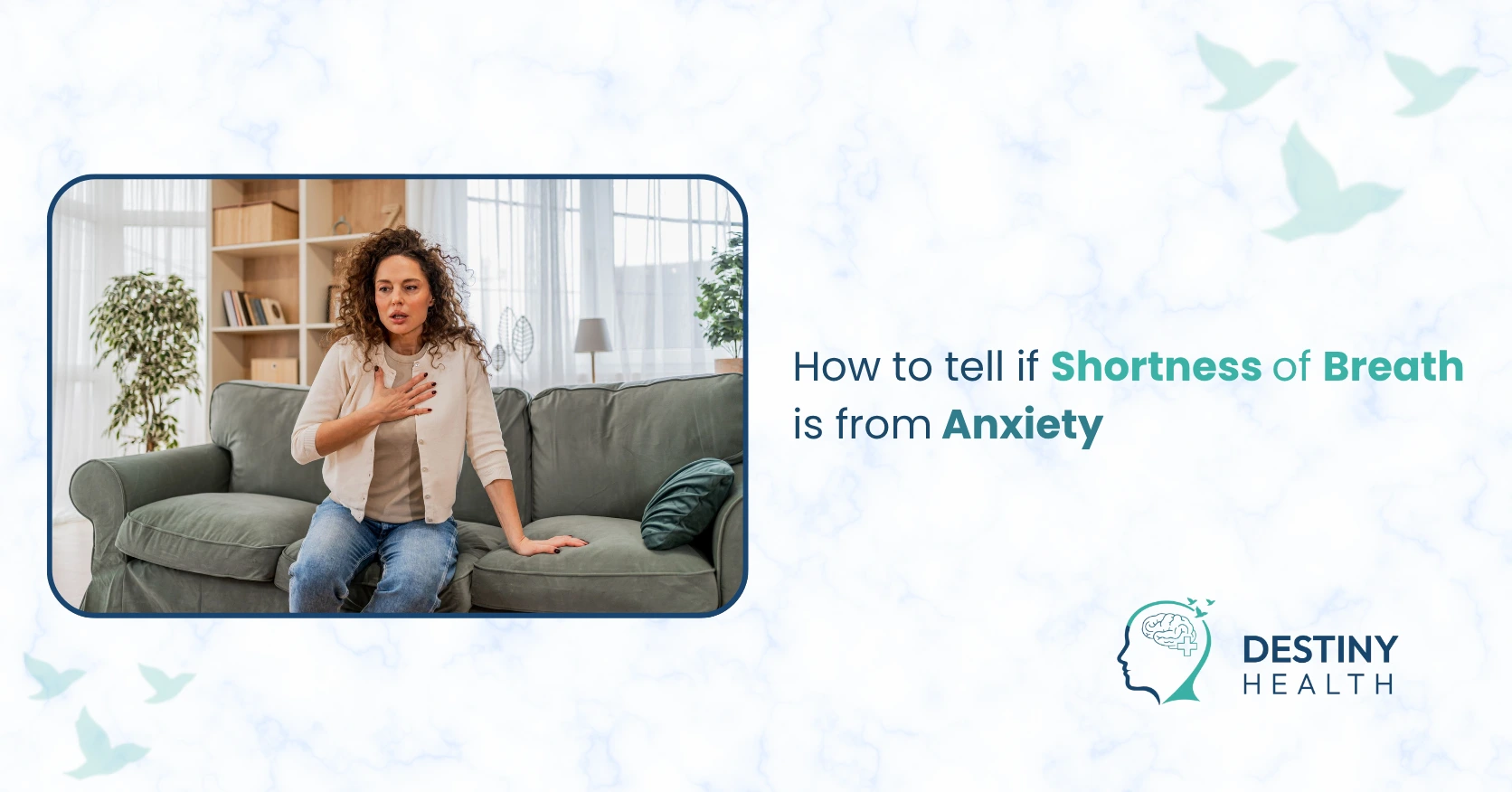
Reviewed by Mercy Oyerinde, PMHNP-BC — Board-Certified Psychiatric-Mental Health Nurse Practitioner. For informational purposes only. New or unexplained shortness of breath should always be evaluated by a medical provider to rule out cardiac, pulmonary, or other physical causes first.
Can’t get a full breath. Not all the time, just often enough. Maybe it hits sitting at your desk doing nothing. You’ve googled it. Not helpful.
Figuring out how to tell if shortness of breath is from anxiety means ruling the physical stuff out first. After that, the pattern tells you a lot.
Check These First
Go to urgent care or a doctor if any of these are true:
- Chest pain, especially if it spreads to the arm, jaw, or back
- Came on suddenly and severely
- Blue tinge on lips or fingertips
- Short of breath when walking, and it’s consistently worse with physical exertion
- Leg swelling alongside it
- History of heart or lung disease
Those need a workup before anything else. A clean cardiac and pulmonary result is what gives you room to look at anxiety as the cause.
What Anxiety Does to Breathing
The stress response triggers faster, shallower breathing. The body is prepping for physical action that never comes. This drops CO2 in the blood.
Low CO2 causes dizziness, tingling in the hands or face, chest tightness, and a feeling that each breath isn’t enough, even though oxygen levels are fine.
Some people also notice difficulty breathing during anxious periods, the brain trying to pull in more air through reflex. It’s the same mechanism running differently.
Signs It’s Likely Anxiety
- Shows up during stress, conflict, or situations that make you nervous
- Gets better when you’re calm or distracted by something else
- No wheeze, no radiating pain, no fever
- Tight chest shortness of breath that comes alongside racing heart or a sense of dread
- Slow deliberate breathing improves it within a few minutes
Panic Attacks Specifically
Panic attack shortness of breath hits fast, peaks within ten minutes, and subsides. Heart pounding, dizziness, sweating, a sense something is very wrong. People end up in emergency rooms during these convinced it’s cardiac. It’s one of the most common reasons someone gets a clean ER workup and walks out still not sure what happened.
The pattern, fast onset, peaks and subsides, no exertion, is what distinguishes it from a cardiac event. But a cardiac event needs to be ruled out first, not assumed away.
The Chronic Version
Anxiety breathing issue is not always acute. Most live with the chronic low grade sense of never catching their breath all day long. Chronic anxiety has a partially-on stress response that keeps breathing slightly dysregulated while not triggering a complete episode.
People describe like they have to actively think about breathing or never really getting a good enough breath. It gets worse when you’re stressed and gets better on a holiday or any real low stress times.
What Helps
Diaphragmatic breathing, the belly moves rather than the chest when you breathe in leads to activation of the parasympathetic nervous system.
Exhaling longer than inhaling, six to seven counts out, stimulates the vagus and specifically slows heart rate. This isn’t a trick. It’s physiological.
It has limits though. Breathing exercises don’t treat the anxiety producing the breathing problem. For a lot of people the respiratory symptoms resolve when the anxiety gets actual treatment, through therapy, medication, or both.
Destiny Health
Mercy Oyerinde, PMHNP-BC, is a board-certified Psychiatric-Mental Health Nurse Practitioner at Destiny Health working with adults dealing with anxiety, panic disorder, depression, and related conditions. Telehealth and phone appointments available.
If shortness of breath has been part of your anxiety and the anxiety itself hasn’t been treated, that’s the part worth addressing.
Phone – (770) 676-2546
Email – support@destinyhealths.com
Hours – Monday to Friday, 9:00 AM to 5:00 PM EST
Website – destinyhealths.com
Disclaimer: Informational only. Not medical advice. Consult a qualified provider for diagnosis and treatment.