
Semaglutide is everywhere right now, in the news, in ads and in group chats.
But ask most people how it actually works and you’ll get a shrug. So let’s break it down properly.
What Semaglutide Actually Is
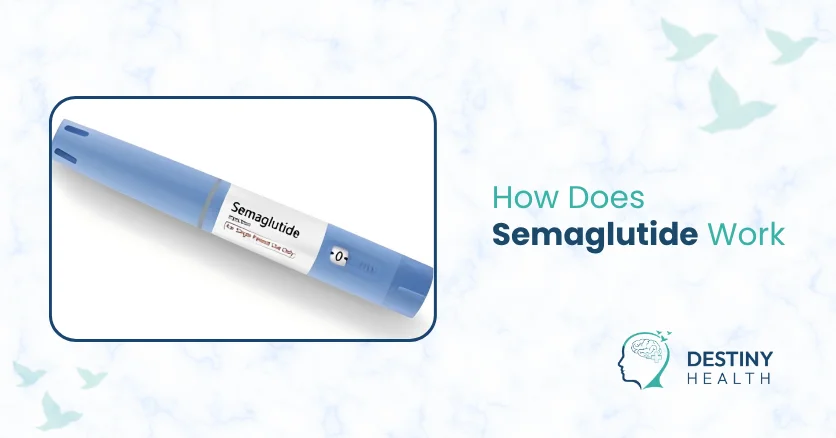
Semaglutide is what is known as a GLP-1 receptor agonist.
GLP-1, or glucagon-like peptide-1, is a hormone that is naturally produced by your gut after you eat.
A lab-made version has been created to mimic it but that version is longer-lasting.
It started out as a diabetes treatment. Side effects of using it included weight loss, and this was observed and later approved as a method of weight management.
However, here are some basics first:
- It’s injected once a week, not taken as a daily pill.
- You’ll see it under different names depending on what it’s prescribed for: Ozempic and Rybelsus for diabetes, Wegovy for weight loss.
- Dosing starts low and increases over weeks under a provider’s supervision. It isn’t a fixed dose from day one.
What’s Actually Happening in Your Body
Your body’s natural GLP-1 hormone is only active for a few minutes before it is eliminated. Semaglutide is designed to be immune to this degradation, and a single dose lasts nearly a week. The secret of the dosing once a week is that’s all it is.
When it enters your body, several things occur at once.
Digestion slows down. Food stays in the stomach longer, and leaves you full sooner and longer.
You’re getting a different signal from your brain. Semaglutide works in the hypothalamus – the region of your brain that regulates your appetite and feelings of fullness. Appetite is not reduced, but the desire to eat is reduced and the cravings are not as intense.
Blood sugar evens out. It stimulates the release of insulin when your blood sugar rises after eating and it lowers glucagon, which raises blood sugar. This means that there will be less volatility in the day.
Why This Leads to Weight Loss
None of this is random. Lower appetite, longer-lasting fullness and steadier blood sugar add up to eating less.
People often describe it as finally being able to hear when they’re full rather than eating past it out of habit.
That said, semaglutide isn’t magic on its own. It works best alongside decent nutrition and some lifestyle support, since the medication removes a lot of the biological resistance to eating less, but habits still need to be built around it.
How Treatment Usually Goes
Most providers follow a similar pattern:
- Start on a low dose for the first several weeks
- Step the dose up gradually based on how you’re tolerating it
- Settle at a maintenance dose once it’s working well
- Inject on the same day each week to keep things consistent
Nobody should be following a generic dosing chart pulled from the internet. This needs to be set by a provider who knows your history.
What the First Few Weeks Feel Like
Early on, there may be some nausea, particularly immediately after an increase in dosage, which fades as your body adjusts.
Appetite changes become apparent within the first few weeks before any significant weight loss is picked up on a scale. Most people adjust best to eating small quantities of food periodically and drinking enough water.
Even though weight loss is gradual, it takes months, not days, to achieve. Patience is important.
Who It’s For
This isn’t a medication that makes sense for everyone. Before recommending it, a provider should look at things like:
- Your current weight and overall health history
- Conditions like thyroid or pancreas issues that might rule it out
- Other medications that could interact
- What you’ve already tried and what your goals actually are
That evaluation is the difference between semaglutide working well for you and it just being the wrong fit at the wrong dose.
How Destiny Health Fits In
Destiny Health’s GLP-1s ACT Weight Loss Protocol pairs semaglutide with a treatment plan that’s actually built around you, not a template. You work directly with Mercy Oyerinde, PMHNP-BC, who monitors your progress and adjusts your plan as you go, all through telehealth from wherever you are.
Thinking About Trying It?
The best next step isn’t a quiz on some website. It’s a real conversation with someone who can look at your health history and tell you honestly whether this is a good fit.
Call Destiny Health at (770) 676-2546, email support@destinyhealths.com, or book your consultation online to get started.