
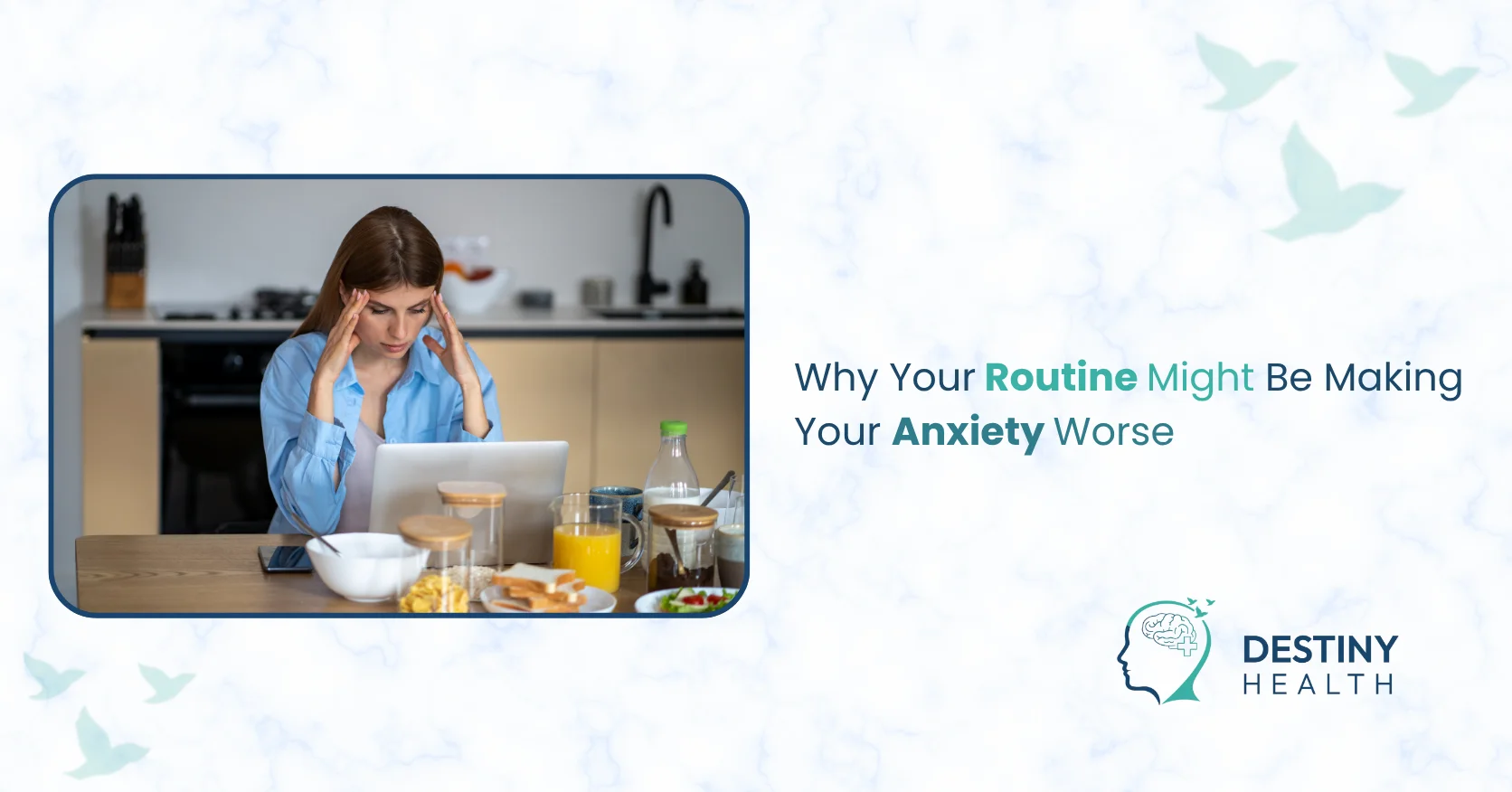
Routines are supposed to help. That is the whole point of them. You build structure into your day so that life feels more manageable, more predictable, less like something happening to you. And for a lot of people, that works.
But for some people, especially those already dealing with anxiety, the routine quietly becomes part of the problem. Not because structure is bad. But because of what the structure is actually built around.
The Difference Between a Routine That Calms and One That Controls
There is a version of routine that comes from a good place. Regular sleep, movement, time outside, meals that are not eaten standing over a sink. That kind of structure supports the nervous system. It gives the day a rhythm that the body can relax into.
Then there is a different version. One that starts with anxiety and grows around it. Where the routine is less about what feels good and more about what feels safe. Where skipping something, even something small, produces a disproportionate amount of dread.
That second kind of routine is not reducing anxiety. It is feeding it. And the longer it runs, the more the anxiety needs it to stay exactly the same.
How Anxiety Builds Into Routine Without You Noticing
It tends to happen gradually. You have a rough patch. Sleep is bad, stress is high, something in your life is destabilizing. So you start controlling what you can. You wake up at the same time every day. You eat the same things. You avoid certain situations that feel too unpredictable. You build in buffer time before anything that feels high stakes.
In the short term, this works. The anxiety quiets down. You feel more in control.
But anxiety has a particular relationship with avoidance. Every time you organize your life around avoiding something that feels threatening, the brain registers that the thing was actually dangerous. The avoidance confirms the fear. And next time, the same situation feels a little worse, and the routine needs to compensate a little more.
Over months and years this can get quite restrictive. Not dramatically. Just quietly, steadily smaller.
Specific Routine Patterns Worth Looking At
Not every routine is a problem. But these particular patterns tend to show up in people whose anxiety has started running the schedule.
Starting the day with your phone. For a lot of people this is so habitual it does not even register as a choice. But beginning the day by scrolling news, emails, or social media puts the nervous system on alert before it has had any time to settle. Anxiety already tends toward hypervigilance. Feeding it information first thing sharpens that edge before the day has started.
Never building in transition time. Anxiety and time pressure are not a good combination. When the day is scheduled so tightly that any delay creates a cascade, the baseline stress level never really drops. The routine looks productive. The body experiences it as a low-level emergency from morning to night.
Exercise that has become compulsive rather than restorative. Movement is genuinely helpful for anxiety. But when skipping a workout produces significant guilt or fear, when the exercise is happening primarily to manage emotional state rather than for health, it has crossed into something else. The routine is now load-bearing in a way that makes it harder to step back from.
Avoiding anything unscheduled. Spontaneity is uncomfortable for a lot of anxious people. Plans that are not pinned down feel threatening. But a life with no room for improvisation is a life that is always bracing for something. That sustained tension is exhausting and tends to make anxiety worse over time, not better.
Checking behaviors built into the day. Checking that the door is locked. Re-reading emails three times before sending. Running through tomorrow’s schedule before bed. Each individual check feels small. But when they are threaded through the day as a consistent pattern, they are adding up to a significant amount of time spent managing anxiety rather than living alongside it.
What This Is Not Saying
None of this means routine is bad or that structure should be abandoned. People with anxiety often do genuinely need more predictability than average, and there is nothing wrong with that. The question is not whether you have a routine. It is whether the routine has room in it, whether it bends occasionally without everything falling apart, whether it was built around what you value or only around what feels safe.
A routine that serves you is one you could adjust without significant distress. One that is quietly controlling you is one where the thought of changing it produces fear out of proportion to the actual stakes.
What Actually Helps
The work here is not about dismantling structure. It is about building a different relationship with it.
Therapy – particularly approaches like cognitive behavioral therapy and acceptance and commitment therapy, is well suited to this.
That’s because the work looks at what the routine is protecting you from, and whether that thing is actually as threatening as the anxiety says it is.
Gradually, and with support, it gets better. The routine stops being something anxiety demands and becomes something you actually choose.
Reach Out
At Destiny Health, Mercy Oyerinde works with people who are doing everything right but still can’t really seem to get out from under the weight of it. If your days are structured and still exhausting and if the routines feel like something you cannot afford to break, that is worth talking through.